1493cc
Air-cooled flat-4
The air-cooled flat-four engine that powered a generation. Code M178.
- Power
- 42 HP
- Fuel
- Single carburetor


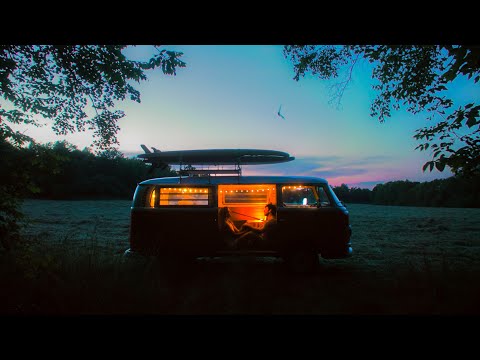
Factory exterior
The 1965 Westfalia Camper continued with the 1493cc engine and fully developed interior conversion while the world around it accelerated toward rupture. Vietnam escalated. Dylan went electric. The Watts riots changed the national conversation. The Westfalia offered no commentary on any of this, but the people buying them were noticing the connection between vehicle and freedom that would make the Bus the symbol of a decade.
1965: Lyndon Johnson sent the first combat troops to Vietnam in March. Selma happened in March. Dylan played electric at Newport in July. The Beatles filled Shea Stadium in August with a crowd so loud no one on stage could hear the music. The Voting Rights Act was signed in August. Watts burned in August. America was living at several incompatible speeds simultaneously, and the tension between them was becoming audible.
The air-cooled flat-four that powered the 1965 T1 Westfalia (Type 2). Simple, reliable, and endlessly modifiable.
1500cc (1.5L) Air-cooled flat-4
47 HP
D
Pickup
4-speed manual
The Type 2 Bus became shorthand for the counterculture.
Show quality: $75,000-120,000. Excellent: $45,000-85,000. Good: $25,000-45,000. Project: $5,000-15,000.
Values from editorial 'Today' section, market conditions vary
Check: heater channels, floor pans, battery tray, cargo floor, wheel wells
full restoration: $60,000-120,000. rust repair: $60,000-120,000
Costs vary dramatically by region and quality expectations
All specifications should be verified before publication.
Refer to the specifications section above for the engine code used in the 1965 Bus. The engine code is typically stamped on the engine case above the generator. For verification assistance, use our M-Code decoder tool.
Confidence: medium — This information should be verified with additional sources.
A 1965 Bus's value ranges from $5,000-15,000 for project cars, $15,000-25,000 for fair condition, $25,000-45,000 for good drivers, $45,000-85,000 for excellent restored examples, $75,000-120,000 for show-quality examples. Condition, originality, and documentation are the primary value drivers. Always get a professional appraisal for insurance or sale purposes.
Confidence: medium — This information should be verified with additional sources.
Sources
1965 Bus models were produced at various Volkswagen factories worldwide. Check the production details above for specific factory information. The factory code can often be identified through chassis number analysis.
Confidence: medium — This information should be verified with additional sources.
Key changes for the 1965 Bus: generation Bus. Evolution from 1950 launch: 1953: Deluxe model with chrome and two. tone paint. 1955: High roof delivery van option. 1963: 1500cc engine replaces 1200cc. 1964: Wider rear door, improved heater. 1965: Fresh air system redesigned, larger taillights. The basic format remained unchanged: forward control, split screen, air. cooled simplicity. The 1967 model would bring major changes: larger windows, different taillights, 1600cc engine. The split screen would disappear. The first generation's purity would end. The '65 represents final development of Volkswagen's original vision: maximum space, minimum complexity, honest function. It's the last pure expression of Ben Pon's original sketch: a box on wheels, drawn in 1947, that changed mobility.. Check the specifications section for complete details about year-to-year evolution.
Confidence: medium — This information should be verified with additional sources.
Common rust areas on a 1965 Bus include: heater channels, floor pans, battery tray, cargo floor, wheel wells, rockers. The heater channels are structural and expensive to repair. Always inspect these areas carefully before purchase.
The 1966 Bus received updates from the 1965 model. Check the specifications section above for details about year-to-year evolution. Common changes across model years include safety updates, mechanical refinements, and regulatory compliance features.
Confidence: medium — This information should be verified with additional sources.
Restoration costs for a 1965 Bus: Full rotisserie restoration: $60,000-120,000. DIY restorations save labor but require significant time investment. Parts availability is generally good for classic VWs. Pro tip: Check the heater channels first
Confidence: medium — This information should be verified with additional sources.
A well-maintained 1965 Bus can serve as a daily driver, but consider the age of the vehicle. Modern traffic, safety features, and reliability expectations differ from the era. Regular maintenance, mechanical knowledge, and realistic expectations are essential. Many owners use classic VWs as weekend drivers or hobby vehicles rather than primary transportation.
Confidence: medium — This information should be verified with additional sources.
Yes, parts availability for classic air-cooled Volkswagens is generally excellent. The large enthusiast community and aftermarket support mean most mechanical and body parts are readily available. Some year-specific trim pieces or rare options may be harder to find, but the core mechanical components are well-supported.
Research current market values for the 1965 T1 Westfalia (Type 2)
Hagerty Valuation Tools
Industry-standard classic car values
Bring a Trailer Results
Recent auction prices
TheSamba Classifieds
Current listings & asking prices
Buying tip: Condition is everything. A rusty "project" can cost more to restore than buying a finished car. Check heater channels, floor pans, and battery tray first.
Original paint options available for the 1965 T1 Westfalia (Type 2).
Looking for a 1965 T1 Westfalia (Type 2) in Black?
Find for SaleExplore the variants available for this model year and find your perfect match.
Want to see a detailed comparison of multiple vehicles?
Compare all variantsNumbers matching verification increases value by 20-40%. Use our tools to verify engine codes, chassis numbers, and M-codes for your 1965 T1 Westfalia (Type 2).
1965: Lyndon Johnson sent the first combat troops to Vietnam in March. Selma happened in March. Dylan played electric at Newport in July. The Beatles filled Shea Stadium in August with a crowd so loud no one on stage could hear the music. The Voting Rights Act was signed in August. Watts burned in August. America was living at several incompatible speeds simultaneously, and the tension between them was becoming audible.
The Westfalia Camper arrived in 1965 with the 1493cc engine, the mature interior conversion, and the complete indifference to current events that made it, in retrospect, the perfect vehicle for its moment. To drive a Westfalia in 1965 was not to escape the world — transistor radios ensured the world followed — but to encounter it at a speed the world had abandoned. The Bus moved at 62 mph on a good road. The world was moving at whatever speed the newsreel required.
The 1965 Westfalia was powered by the 1493cc flat-four making 42 horsepower, paired with a four-speed manual gearbox and driving the rear wheels through the familiar swing-axle arrangement. The T1 body remained the split-window design: two-piece windscreen, round headlamps, the barn-door rear hatch, the curved roofline. This body had been in production since 1950 and would continue through 1967. In 1965 it looked neither old-fashioned nor modern. It looked like itself.
Inside, the Westfalia conversion had achieved its mature form. Two-burner Camping Gaz cooker, fresh-water tank and integrated sink, fold-flat sleeping platform for two, multiple storage compartments, full curtain set. The optional Westfalia Joker interior arrangement — which had been refined through several iterations — offered a more modular organization than the fixed cabinet system. Some 1965 models featured an improved roof ventilation system, addressing the condensation issues that had been documented in owner correspondence since the early years.
The 1965 Westfalia was special for being, two years before the Summer of Love, the vehicle that would be retrospectively understood as the Summer of Love's rolling home. The connection between the Bus and the counterculture wasn't manufactured by Volkswagen's marketing department — it was made by young people making practical choices. The Bus was cheap to buy, cheap to run, capable of carrying a band's equipment or a commune's supplies, and large enough to sleep in.
The Westfalia conversion made the Bus more capable and more expensive, which positioned it slightly above the student-budget Microbus. But the cultural identity was shared. By 1965, the Bus was recognizable in a way that transcended its specifications. Park one at a peace rally and nobody asked what engine it had. Park one at a protest camp and nobody needed to explain why it was there. The vehicle and the moment had found each other, and 1965 was the year that connection became fixed.
The specific quality of 1965 was urgency competing with beauty. The Selma marches produced the Voting Rights Act. Dylan's Newport electric set produced a new kind of rock music. The Vietnam escalation produced a new kind of protest. All of these were happening simultaneously, and the generation that would define the late 1960s was watching and deciding which side they were on.
The Westfalia Camper existed at the intersection of practical mobility and philosophical freedom. You could camp anywhere the road went. You could sleep in national parks without paying for hotels. You could follow the music, the protest, the season, without filing an itinerary with anyone. This freedom was not ideological in 1965 — it was practical. But practical freedoms have a way of accumulating into something larger, and the Bus was accumulating meaning faster than Volkswagen's marketing department could track.
The 1965 Westfalia drove with the character that the T1 generation had been developing for fifteen years: deliberate, mechanical, rewarding of smooth inputs, punishing of hurried ones. The 42-horsepower engine produced enough torque at low rpm to cruise on flat roads without constant gear changes, and enough reserve to manage most grades without drama. The four-speed gearbox required the driver to be present — not absent-mindedly cruising, but actively engaged with gradient and speed.
American buyers in 1965 were discovering that the Bus demanded a different kind of driving than the Detroit vehicles they had grown up with. There was no power steering. The steering wheel was large, the gearing slow. There was no servo assistance on the brakes, which were drums all around and required firm, considered pedal pressure. The heater worked adequately. The rear window defroster was optional and frequently necessary in the American Midwest.
In 1965, the Westfalia buyer in America was beginning to stratify. Older buyers — families, outdoors enthusiasts, camping-focused professionals — bought the Westfalia as a camping vehicle and used it as one: mountains, national parks, organized campgrounds. Younger buyers were discovering that the same vehicle served a different set of needs: festival attendance, extended road trips, the general project of being somewhere else without having to come back.
Both groups were served by the same vehicle, and both groups were, in their different ways, purchasing mobility as a value. The difference was destination: families drove to planned destinations; younger buyers drove away from unplanned ones. The Westfalia accommodated both itineraries without preference.
A 1965 Westfalia occupies the high end of affordable split-window Bus values. Two more years remained in T1 production after 1965, and the split-window premium applies to all of them. The 1493cc engine is the correct specification and is well-supported by the aftermarket; buyers should resist the temptation to 'upgrade' to a later 1600cc unit, which reduces authenticity and, increasingly, reduces value.
California-origin vehicles command premiums for documented rust-free history. Conversely, California vehicles have often been more heavily used as camping vehicles, and Westfalia interiors from active camping service show commensurate wear. A dry-climate survivor with documented single-family history is the ideal; such vehicles are found, occasionally, through estate sales and long-term collector networks rather than the open market.
The 1965 Westfalia is two years from being the last split-window and two years into the counterculture's discovery of the Bus as its preferred vehicle. It sits at a precise cultural hinge point, after the early-adopter years and before the Summer of Love mythology overwhelmed the practical reality of what the vehicle was.
It was a camping van. It was well-designed. It asked to be driven slowly and used for the purpose it was built for. In 1965, as the world around it was accelerating toward something large and irrevocable, the Westfalia's 42-horsepower invitation to slow down was either irrelevant or essential. Most owners chose essential.