1600cc
Displacement
57HP
Power
N/A
Top Speed

Real Stories

Shaped by Hope: The Story of 'Azul'
The Story of Georgie the VW Bus

The Morning After Woodstock

The Summer of Love had peaked and fractured. The 1970 Kombi arrived into a movement still processing what it had been, still moving across a country it was trying to understand. The Bus kept carrying people. The people kept finding new reasons to need it.

The 1970 Volkswagen Bus arrived as something more than transportation. It was permission. Permission to leave. Permission to arrive somewhere without a reservation. Permission to sleep where you stopped and move when you were ready.

Read the Full Story

Engineering.

The air-cooled flat-four that powered the 1970 T2 Microbus (Type 2). Simple, reliable, and endlessly modifiable.

1600cc

Air-cooled flat-4

The air-cooled flat-four engine that powered a generation. Code AE.

Power
57 HP
Fuel
Carburetor

Highlights.

Feature

Cultural context

counterculture, movement

Feature

Feature 2

The Type 2's boxy, forward-control layout was radical for its time.

Engine

Engine Size

1584cc (1.584L) Air-cooled flat-4 / Type 4

Engine

Horsepower

47 HP

Quick Facts — 1970 Bus

  • Engine SizeNeeds Review

    1584cc (1.584L) Air-cooled flat-4 / Type 4

  • HorsepowerNeeds Review

    47 HP

  • Engine CodeNeeds Review

    B0, AD

  • Body StyleNeeds Review

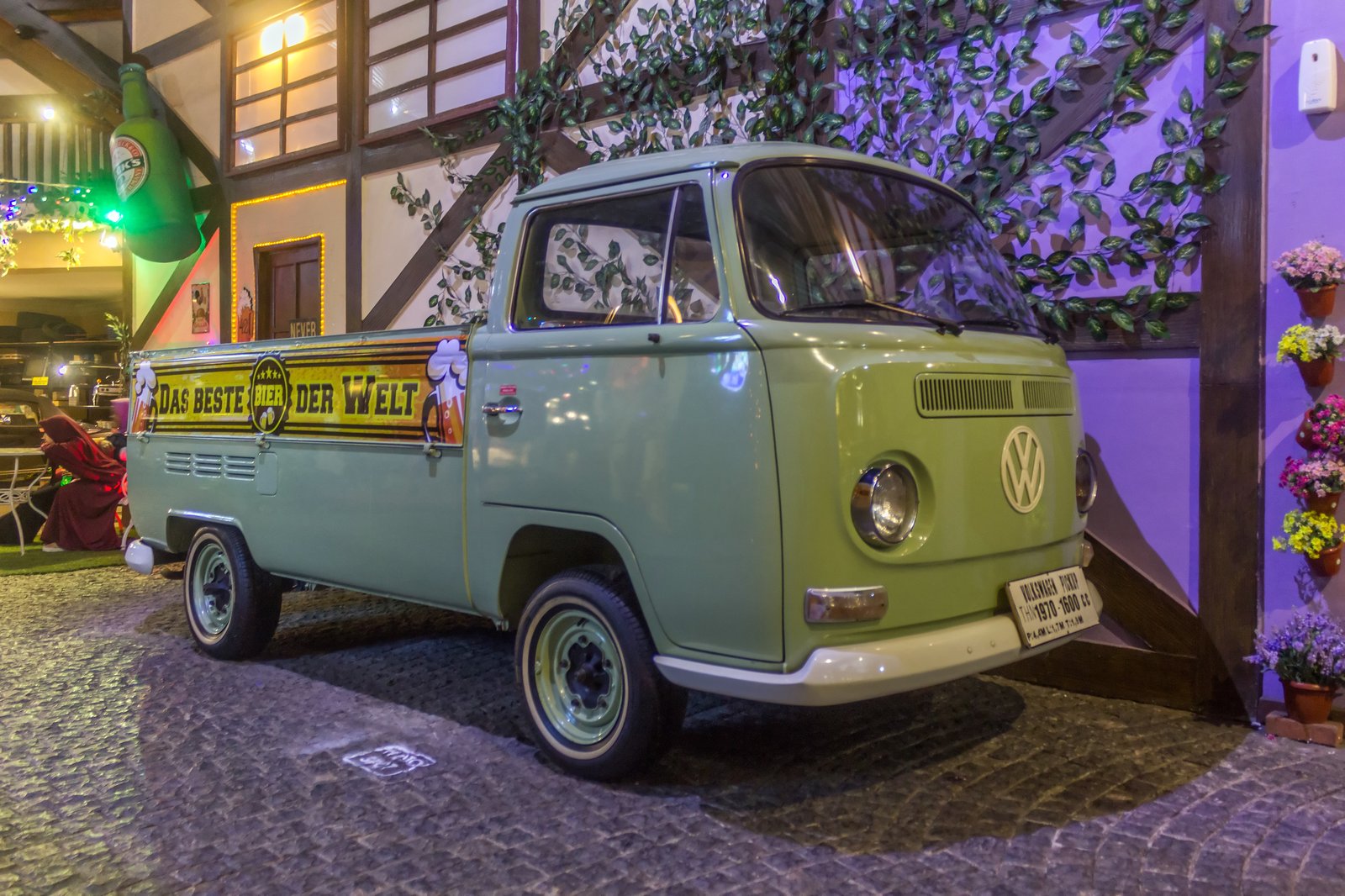
    Pickup

  • TransmissionNeeds Review

    4-speed manual

  • Cultural SignificanceNeeds Review

    Earth Day 1970 mobilized 20 million Americans for environmental consciousness.

All specifications should be verified before publication.

Top Questions — 1970 Bus

Refer to the specifications section above for the engine code used in the 1970 Bus. The engine code is typically stamped on the engine case above the generator. For verification assistance, use our M-Code decoder tool.

Confidence: medium — This information should be verified with additional sources.

The value of a 1970 Bus varies significantly based on condition, originality, and documentation. Driver-quality examples typically range from lower values, while excellent restored or numbers-matching examples command premiums. Condition, originality, and documentation are the primary value drivers. Always get a professional appraisal for insurance or sale purposes.

Confidence: low — This information requires verification before use.

1970 Bus models were produced at various Volkswagen factories worldwide. Check the production details above for specific factory information. The factory code can often be identified through chassis number analysis.

Confidence: medium — This information should be verified with additional sources.

The 1970 Bus received several updates from the 1969 model. Refer to the specifications and editorial sections above for detailed information about year-to-year changes. Changes may include mechanical updates, safety features, or cosmetic refinements.

Confidence: medium — This information should be verified with additional sources.

Common rust areas on air-cooled Volkswagens include heater channels (under running boards), floor pans (especially front and battery tray area), front beam (suspension mounting point), rear chassis/apron (where bumper mounts), and door bottoms. The heater channels are structural and expensive to repair. Always inspect these areas carefully before purchase.

The 1971 Bus received updates from the 1970 model. Check the specifications section above for details about year-to-year evolution. Common changes across model years include safety updates, mechanical refinements, and regulatory compliance features.

Confidence: medium — This information should be verified with additional sources.

A full rotisserie restoration typically costs $25,000-$50,000+ depending on condition and level of finish. Mechanical refresh (engine, brakes, suspension) runs $5,000-$12,000. Bodywork and paint alone can be $8,000-$15,000 for quality work. DIY restorations save labor but require significant time investment (500-1,000 hours). Parts availability is generally good for classic VWs, which helps control costs.

Confidence: low — This information requires verification before use.

Numbers matching (original engine, transmission, and chassis) typically increases value by 20-40% over non-matching examples. However, the premium varies based on overall condition, documentation, and market demand. Use our numbers matching verification tool to check your vehicle.

Confidence: medium — This information should be verified with additional sources.

A well-maintained 1970 Bus can serve as a daily driver, but consider the age of the vehicle. Modern traffic, safety features, and reliability expectations differ from the era. Regular maintenance, mechanical knowledge, and realistic expectations are essential. Many owners use classic VWs as weekend drivers or hobby vehicles rather than primary transportation.

Confidence: medium — This information should be verified with additional sources.

Yes, parts availability for classic air-cooled Volkswagens is generally excellent. The large enthusiast community and aftermarket support mean most mechanical and body parts are readily available. Some year-specific trim pieces or rare options may be harder to find, but the core mechanical components are well-supported.

Why This Year Matters

Needs Review
  • Cultural context: counterculture, movement
  • The Type 2's boxy, forward-control layout was radical for its time.
Collector AppealMedium
Restoration ComplexityMedium
Daily Driver SuitabilityMedium

Valuation Resources

Research current market values for the 1970 T2 Microbus (Type 2)

Buying tip: Condition is everything. A rusty "project" can cost more to restore than buying a finished car. Check heater channels, floor pans, and battery tray first.

Which 1970 Bus fits your style?

Explore the variants available for this model year and find your perfect match.

Want to see a detailed comparison of multiple vehicles?

Compare all variants

Verify Authenticity

Numbers matching verification increases value by 20-40%. Use our tools to verify engine codes, chassis numbers, and M-codes for your 1970 T2 Microbus (Type 2).

Correct Engine CodeAE

The Full Story

Introduction

The 1970 Volkswagen Bus arrived as something more than transportation. It was permission. Permission to leave. Permission to arrive somewhere without a reservation. Permission to sleep where you stopped and move when you were ready.

The original 1967 Summer of Love had peaked and fractured, but the spirit of communal travel — of exodus from ordinary American life — was very much alive in 1970. Woodstock had happened in 1969. The movement had proven it could gather. The question now was what to do with that momentum.

What It Was

By 1970, the VW Bus had become the counterculture's official vehicle. The Grateful Dead had painted one. Ken Kesey had driven one across America. The design — Bay Window body introduced in 1968 — was thoroughly modern by Bus standards, offering more interior space and improved visibility.

The 1970 Bus carried its history visibly. Every one on the road was already a veteran — of road trips, of concerts, of the decade's upheavals. The new Bay Window body gave the vehicle a cleaner face. What it carried inside was irreplaceable: eighteen years of accumulated cultural meaning applied to every seam and rivet.

What Made It Special

That boxy profile wasn't sleek. It wasn't trying to be. The Bus announced its purpose: maximum interior space, accessible from a sliding door, available to whoever needed it. The communal interior arrangement — eight passengers in conversation rather than isolation — was the design detail that had made the Bus the counterculture's chosen vehicle.

The horizontally-hinged barn doors at the rear. The pop-up roof options in some markets. The ability to carry everything you owned for weeks without running out of room. Westfalia camper kits made genuine mobile living possible: a bed, a small stove, storage built to purpose. Your car became your home. This wasn't a compromise — it was a liberation.

Cultural Context

The original 1967 Summer of Love had peaked and fractured, but the spirit of communal travel, of exodus from ordinary American life, persisted into 1970. Woodstock had happened. Kent State had happened. The counterculture was processing its relationship with America through motion — always through motion.

Westfalia camper kits made this real: a Pop-Up roof, a bed, a tiny stove. Your car became your home. In 1970, with the country in upheaval and a generation questioning every received assumption, the ability to take your home with you was more than convenience — it was a form of freedom.

How It Drove

The 1970 Bus taught something that every generation needs to relearn: sometimes the most radical thing you can do is go somewhere. The 47-horsepower engine made 65 mph achievable if not comfortable. But nobody was in a hurry. The Bus asked you to be present for the journey, and the journey rewarded you for accepting the request.

The Bay Window design's improved forward visibility made long-distance driving more comfortable. The driver sat at the prow of the vehicle, the road visible far ahead, the sensation of forward motion more direct than in any contemporary American car.

Who Bought It

Forty years later, teenagers would discover 1970 Buses at auctions and feel the same pull: here's a vehicle that asks something of you. Here's a vehicle that has opinions about how you should travel. The 1970 Bus wasn't buying neutrality. It was committing to a way of moving through the world.

In 1970, the buyer was everyone who had been part of the decade's upheavals and needed a vehicle for what came next: the commune, the road trip, the festival circuit, the return to the land. The Bus served all of them.

Buying Today

Check Hagerty for values, but every 1970 Bus owner knows the real treasure: you own a piece of the counterculture's infrastructure. Not the mythology — the actual object that moved the actual people who made the actual history.

Values for solid 1970 Bay Window Buses range from $30,000 for honest drivers to $95,000 for excellent examples. The Bay Window body has different rust patterns than the T1 — inspect the lower body panels, the floor sections, the area around the sliding door. The mechanicals are mature and well-supported by the parts market.

The Verdict

The 1970 Bus is still on the road. Still carrying people toward horizon lines. Still teaching the lesson that every generation learns differently but always needs: sometimes the most important destination is the one you haven't planned yet.

The morning after Woodstock was complicated. The movement was trying to understand what it had been and what it would become. The Bus kept running, kept moving, kept serving as the infrastructure for the next decision.

Do you have a Bus story? Maybe you took a cross-country trip in one. Maybe you attended a festival reachable only by dirt road. Maybe you just drove one once and understood immediately what fifty years of devotion is about. The 1970 Bus is that understanding, made into metal and glass and forty-seven horsepower.