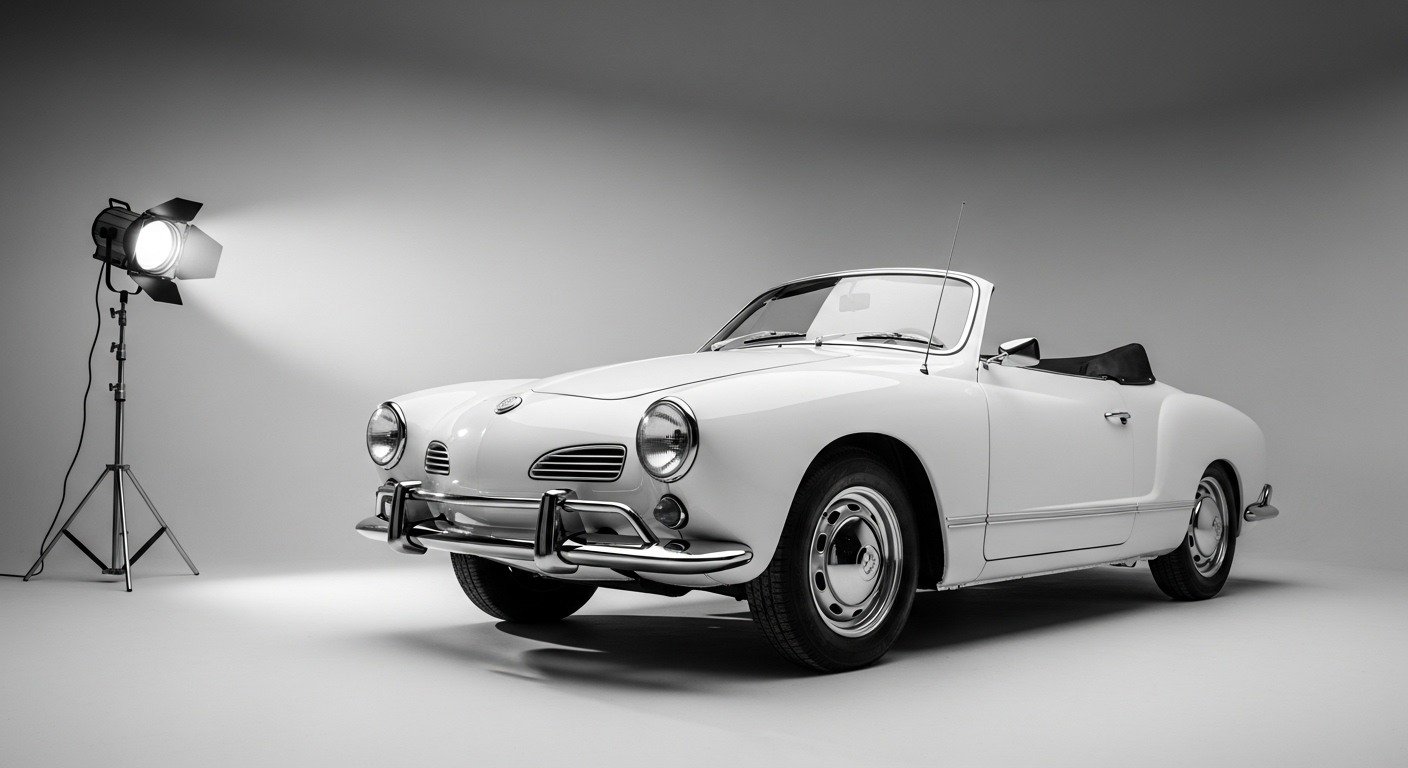
Coupe

1953 Type 14 Coupe

1600cc
Displacement
N/A
Power
N/A
Top Speed

Real Stories

VW Karmann Ghia 'lowlight' Debut

Before the world knew it needed one.

The 1953 Karmann Ghia Coupe was a prototype that became a prophecy. Hand-formed in Osnabrück, designed in Turin, powered by Wolfsburg: a collaboration that produced something Germany had never made before. A beautiful car.

In 1953, nobody had asked for this car. That's what made it inevitable. A devastated continent was rebuilding, and Volkswagen — the people's car company — had decided the people deserved something more than transport. They deserved desire.

Read the Full Story

Engineering.

The air-cooled flat-four that powered the 1953 Type 14 Coupe. Simple, reliable, and endlessly modifiable.

1600cc

Air-cooled

The air-cooled flat-four engine that powered a generation. Code .

Power
N/A
Fuel
Carburetor

Valuation Resources

Research current market values for the 1953 Type 14 Coupe

Buying tip: Condition is everything. A rusty "project" can cost more to restore than buying a finished car. Check heater channels, floor pans, and battery tray first.

Which 1953 Karmann Ghia fits your style?

Explore the variants available for this model year and find your perfect match.

Want to see a detailed comparison of multiple vehicles?

Compare all variants

Verify Authenticity

Numbers matching verification increases value by 20-40%. Use our tools to verify engine codes, chassis numbers, and M-codes for your 1953 Type 14 Coupe.

The Full Story

Introduction

In 1953, nobody had asked for this car. That's what made it inevitable. A devastated continent was rebuilding, and Volkswagen — the people's car company — had decided the people deserved something more than transport. They deserved desire.

What emerged from a meeting between VW's Heinz Nordhoff, Ghia's Luigi Segre, and coachbuilder Wilhelm Karmann was a prototype that defied every commercial logic. It was too small to be a sports car. Too expensive to be a Beetle. Too beautiful to ignore.

The 1953 Karmann Ghia Coupe was a pre-production creation — each one essentially hand-built, each one slightly different from the last. It was the beginning of something that would run, largely unchanged, for twenty years.

What It Was

The 1953 Coupe was manually constructed, each car a semi-bespoke creation. The bodywork showcased European coachbuilding mastery: smooth, unadorned surfaces; gentle curves that suggested motion even at rest; and those distinctive horizontal taillights set into the rounded rear haunches.

Inside, the cabin was snug — almost intimate. Leather accents, proper instruments, and hand-stitched details spoke to craft rather than mass production. The steering wheel had real leather, the seats proper springs. This wasn't a Beetle with a fancy body. It was a proper small sports car.

The silhouette came from Ghia's workshop in Turin, shaped by designer Luigi Segre. It sat low on the Beetle's platform, stretched and narrowed into something that looked like it belonged on a Mediterranean boulevard rather than a German Autobahn. Which was exactly the point.

What Made It Special

Beneath the graceful exterior beat a Beetle's heart: the 1131cc air-cooled four-cylinder, producing around 30 horsepower. The innovation wasn't in power but in purpose. Karmann engineers adapted the platform with care, keeping the torsion bar suspension and swing axle geometry but tuning the whole for a lower, lighter body.

The hand-crafted construction meant each car was slightly different — a characteristic that would later become sought-after among collectors. Real steel, real aluminum, real welds by skilled hands. Panel gaps were not measured by robot. They were judged by eye, by a craftsman who cared.

This wasn't yet a production car. It was a promise. And Volkswagen's genius was understanding that some promises are worth keeping exactly as made.

How It Drove

Driving it meant accepting that you were piloting something handmade, temperamental in ways that modern cars aren't. The clutch required understanding. The narrow tires demanded respect on corners. But the steering was direct, the brakes adequate for the weight, and the overall experience was one of connection to the machine.

The engine sat behind the rear axle, which made the car feel light in front — almost eager to rotate if you were careless on corner entry. The right approach was smooth: deliberate inputs, patience with the throttle, letting the car flow through bends rather than forcing them.

On a warm evening with the windows cracked, the coupe invited cruising through village squares, stopping heads, attracting admiration. It was not a car for hurrying. It was a car for arriving.

Cultural Context

1953: Western Europe was rebuilding. The Marshall Plan was reshaping economies. In Germany, the Wirtschaftswunder — the economic miracle — was beginning. Stalin had died in March. The Korean War armistice was signed in July. The world was exhaling.

Luxury was returning, but it had to be earned, understated, proof of refined taste rather than brash wealth. The Karmann Ghia entered this moment as a masterstroke of psychological marketing. For those who could afford more but valued discretion, here was a statement of judgment. It said: I understand design. I appreciate craft. I don't need to shout.

The car became a signal in the emerging post-war European middle class: intellectuals, artists, successful tradesmen who wanted something that whispered rather than roared. Edmund Hillary had just climbed Everest. A new era was beginning. This car felt like it belonged in it.

Who Bought It

In 1953, the Karmann Ghia was not yet for sale. It was being seen — at auto shows, in magazines, in the imagination of people who had not previously thought much about Volkswagen. The buyers who would eventually acquire the early production examples were a specific type: design-literate, European-influenced, immune to chrome.

Architects and artists. Journalists who had been to Italy. Young professionals who found American excess embarrassing. Women who appreciated that this car didn't require a performance to drive it — no grinding gears, no aggressive posturing. Just proportion and purpose.

They weren't buying speed. They were buying the knowledge that they had found something better than fast.

Buying Today

The 1953 Karmann Ghia was a prototype year — fewer examples exist than any other vintage. Every surviving car is a piece of automotive history, and the evidence of hand-assembly is visible in each one: slight variations in panel fit, subtle differences in trim execution. These are not flaws. They are provenance.

Expect to pay a significant premium for early-year examples, and expect substantial restoration costs unless you find a survivor in exceptional condition. Parts availability through the Beetle network is generally good for mechanical components, but early body-specific pieces require specialist sourcing.

Have the body metal inspected by someone who knows where 1953 Karmann Ghias rust — because they all do, eventually. A good example is worth the investment. Check Hagerty for current valuations. The market for early coupes has been steadily rising as their historical significance becomes better understood.

The Verdict

The 1953 Karmann Ghia represents something that has been largely designed out of modern automobiles: the evidence of human hands. Every surviving car carries the fingerprints — sometimes literally — of the craftsmen in Osnabrück who shaped it.

In an age of algorithmic design and robotic precision, there's profound appeal in a car made by people who cared about what they were making. The slight irregularities, the individual character of each example — these are features, not flaws.

If you can find one, acquire it. Not as an investment. As a reckoning with what cars were before they became appliances.