Reference review: source-recorded details; historical accuracy has not been comprehensively verified.
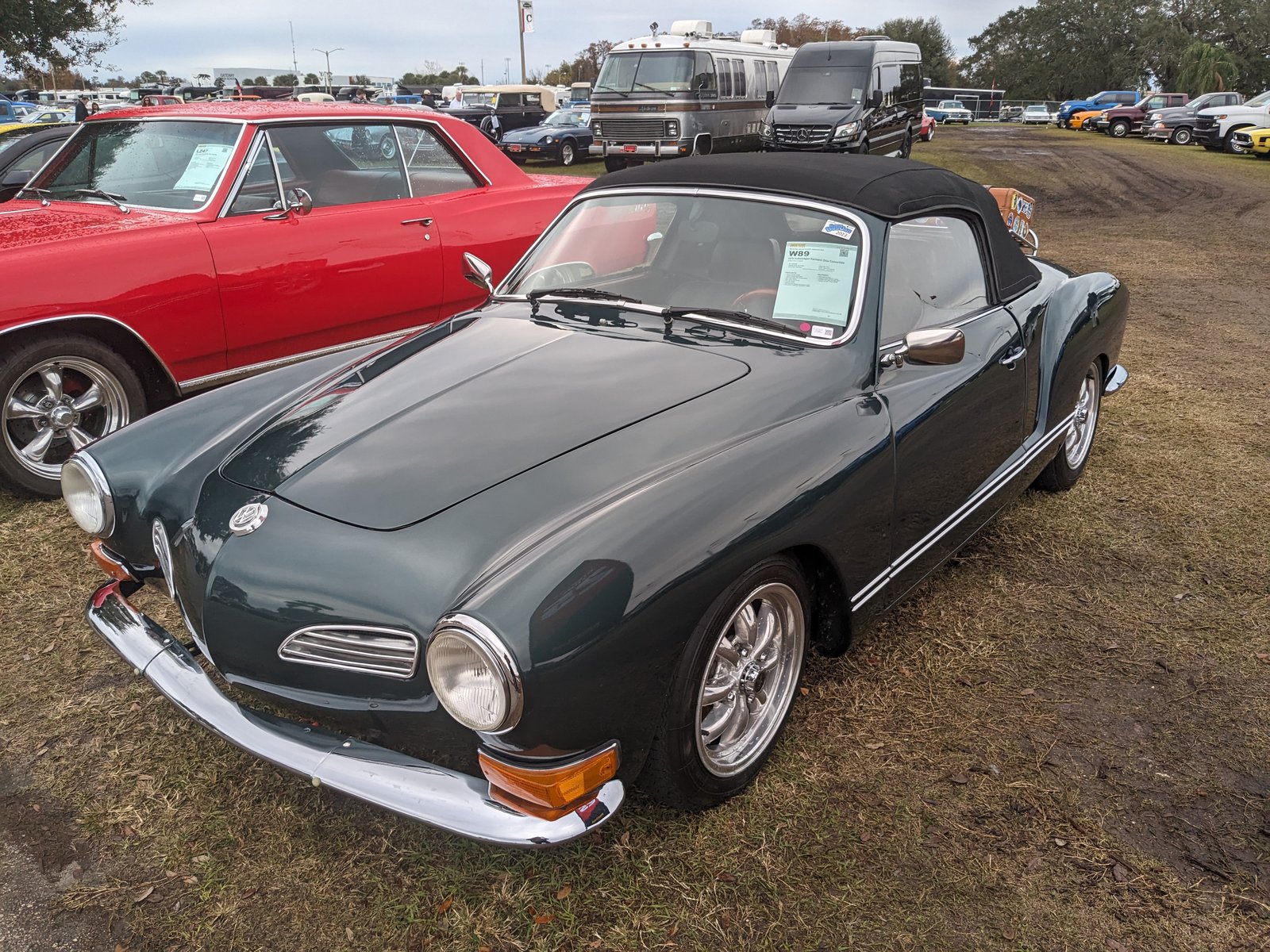
1970 · Type 14 Ghia
1970 Type 14 Ghia
Every 1970 Type 14 Ghia record we hold — 2 Convertible entries, 2 Coupe entries — is under identity review. VWX does not pick one.
Real Stories
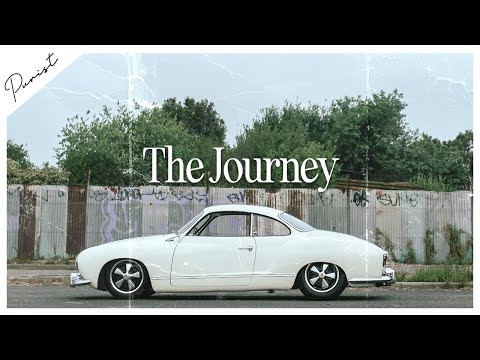
Every 1970 Type 14 Ghia record we hold — 2 Convertible entries, 2 Coupe entries — is under identity review. VWX does not pick one.
The records conflict. Rather than choose one and call it history, we leave both visible and say so.
1970 body styles
1970 Convertible
Identity under review
1970 Coupe
Identity under review · story recorded
Factory colours recorded for 1970
Paint codes whose recorded availability covers 1970, from the VWX colour reference. They are not tied to any record on this page; year applicability remains under review.
- Deep Sea GreenL66D1970
- Cobalt BlueL6301969-1970
- ChinchillaL70F1969-1970
- Elm GreenL60D1970-1972
- Pastel WhiteL90D1970-1972
- Yukon YellowL19K1968-1970
- Cloud WhiteL5811968-1970
- Savanna BeigeL6201968-1970
- Ravenna GreenL65K1970-1973
- ClementineL20D1969-1972
- Diamond BlueL50B1969-1972
- Irish GreenL60E1969-1972
Identity under review
1970 Type 14 Ghia
More than one record claims this car, and VWX has not picked one. So the specifications, the colours and the factory data stay off this page. The story does not: it was written from the sources we hold, and hiding it would not make the car any clearer.
Reference review: source-recorded details; historical accuracy has not been comprehensively verified.
Open the Coupe recordThe story on file
970: Disco fever rising, bell bottoms widening, culture embracing excess. Detroit was building muscle cars. Japan was building economy. Italy was building drama. And in Osnabrück, Karmann was still handcrafting elegance. The Type 14 Karmann Ghia entered 1970 as automotive meditation—the counterpoint to a world getting louder, faster, more complicated. Its 1600cc engine made 60 horsepower. Its handcrafted body made statements. While culture shouted, the Karmann Ghia whispered. That whisper carried farther than any shout.
Model Information and History
What It Was
The 1970 Karmann Ghia Type 14 was elegance explained in steel and air-cooled aluminum. Factory specifications tell part of the story:
- Engine: 1600cc flat-four, 60 horsepower, dual-port heads
- Transmission: 4-speed manual, fully synchronized
- Body: Hand-formed steel, no two exactly alike
- Interior: Two seats, vinyl or leatherette, minimal instrumentation
- Weight: 1,808 pounds
- Top Speed: 93 mph (eventually)
But specifications miss the point. This wasn't about numbers. It was about proportion. Balance. The way light played across those hand-formed curves. The way each car carried tiny variations—evidence of human craft in an increasingly automated world.
What Made It Special
The 1970 Karmann Ghia wasn't special because it changed. It was special because it refused to. While other manufacturers chased trends—more chrome, more power, more everything—the Type 14 remained steadfastly itself. The 1600cc engine was now standard, offering the most refined driving experience in the model's history. Dual-port heads improved breathing. Front disc brakes improved stopping. But the essence remained unchanged: beauty through simplicity.
Every body panel was still hand-formed. Every weld was still done by craftsmen who'd been shaping these curves for fifteen years. In 1970, this level of hand-finishing was increasingly rare. Mass production was the future. The Karmann Ghia was a deliberate anachronism—and that made it revolutionary.
Cultural Context
1970 was the year the sixties dream fractured. Jimi Hendrix and Janis Joplin died. The Beatles broke up. Vietnam continued. The Manson trials dominated headlines. The counterculture was splintering into disco hedonism and hard-edge rebellion.
Automotive culture reflected this split. Detroit's muscle cars reached peak excess—Chevelle SS 454s, Hemi 'Cudas, Boss 429 Mustangs. Japanese imports offered rational alternatives—Datsun 240Z proving sports cars could be reliable. European luxury doubled down on complexity—Mercedes engineering increasingly computerized.
The Karmann Ghia occupied unique cultural space. Not a rebellion against the system (like muscle cars), not a rational alternative (like Japanese imports), not a status symbol (like European luxury). Instead, it represented something increasingly rare: the quiet confidence to be exactly what you are.
In fashion, architecture, and design, minimalism was emerging as counterpoint to cultural excess. The Karmann Ghia aligned perfectly with this movement—beauty through reduction, elegance through simplicity.
How It Drove
The 1970 Karmann Ghia drove like a conversation with a wise friend. Not fast (0-60 in about 18 seconds), not sharp (swing axle rear suspension required respect), but deeply rewarding if you listened.
The 1600cc engine's 60 horsepower arrived gradually, like a good story finding its rhythm. The four-speed gearbox clicked through ratios with mechanical precision. The steering, unassisted, transmitted every texture of the road. You didn't drive a Karmann Ghia—you collaborated with it.
Today, that experience feels revelatory. Modern cars isolate. The Karmann Ghia connects. Every input has consequence. Every response carries information. It's slow by 2025 standards, but that slowness creates presence. You notice things. You feel things. You remember why you love driving.
Who Bought It
Karmann Ghia buyers in 1970 were making a statement through subtraction. They were choosing:
- Elegance over excess
- Craft over mass production
- Presence over escape
- Conversation over isolation
Typical buyers included:
- Architects and designers who appreciated its honest minimalism
- Young professionals rejecting corporate values
- Artists and writers seeking automotive poetry
- Anyone who understood that true style whispers
The price ($2,395) was substantial for a Volkswagen—about $400 more than a Beetle. But buyers weren't comparing it to Beetles. They were choosing it over Porsches, Alfa Romeos, and increasingly, BMW 2002s. They were buying a philosophy as much as a car.
Evolution
The Type 14's evolution was subtle—a study in refinement over revolution:
1955: Initial release, 1192cc/36hp 1961: Engine to 1300cc/40hp 1966: 1500cc/53hp option added 1967: Dual-circuit brakes, more safety features 1970: 1600cc standard, peak refinement
By 1970, the design was fully mature. Every panel gap was optimized. Every curve was perfected. The 1600cc engine offered the best balance of power and character. The chassis was as sorted as swing-axle architecture could be.
The Karmann Ghia evolved like a fine wine—subtle improvements that respected the original vision. No dramatic changes. No trendy updates. Just continuous refinement of an already beautiful idea.
Today
Current market values (2025) reflect growing appreciation:
- Concours: $35,000-45,000
- Excellent: $25,000-35,000
- Good: $15,000-25,000
- Fair: $8,000-15,000
- Project: $4,000-8,000
The trend is upward but gentle—like the car itself. These aren't speculation vehicles. They're appreciating classics that reward patience and taste.
Best investment approach: Buy the best example you can afford. These cars reward quality. Restoration costs typically exceed market value—you restore them for love, not profit.
The 1970 model year commands no premium over other late Type 14s. The value is in condition and authenticity, not specific year.
Restoration
Restoring a 1970 Karmann Ghia requires patience, skill, and respect for hand-crafted complexity. Common issues:
- Body rust (especially rocker panels, fenders, nose)
- Floor pan deterioration
- Heater channel rust
- Engine seal leaks
- Suspension wear
Parts availability:
- Mechanical: Excellent (shared with Beetle)
- Body panels: Good (reproduction available)
- Trim: Fair (some pieces rare)
- Interior: Good (reproduction quality varies)
Key advice:
- Document everything during disassembly
- Photograph body panel fit before removal
- Budget 200+ hours for quality restoration
- Find experienced metal craftsmen
- Expect the unexpected—hand-built cars have secrets
The Bottom Line
The 1970 Karmann Ghia Type 14 is automotive poetry in a world that increasingly prefers prose. It's not practical. It's not fast. It's not even particularly reliable by modern standards. But it is beautiful—deeply, honestly, eternally beautiful.
Buy one if:
- You value elegance over speed
- You appreciate hand-crafted imperfection
- You understand that style whispers
- You want to drive something that matters
Don't buy one if:
- You need modern convenience
- You're seeking investment returns
- You can't appreciate slow beauty
In 1970, the Karmann Ghia was a statement against excess. In 2025, it's a reminder that some statements never go out of style.
Nearby years
Explore the ecosystem
Some of this works today. Some of it is still an idea. The chips say which.